I attended a meeting of the LEGS Platform who are funding my visit to Lund. LEGS stands for Long-term Energy Growth and Sustainability.
As the website says: "It a new platform for inter-faculty and interdisciplinary knowledge creation and exchange at LUSEM (Lund University School of Economics and Management). It was founded March 2009 on the basis of a strategic decision by the vice chancellor of Lund University. The focus is on economic aspects of energy systems, which face the challenge of accomplishing large technological shifts in order to mitigate harmful climate change. To encourage shifts towards sustainability it is necessary not only to promote technical innovations, but also to learn more about firms under competitive pressure and new institutional settings."
The program is funded at a rate of SEK 1 million per year but also is a basis for seeking further grants. They are interested in bringing more visitors to Lund. We discussed various ways of raising visibility including conferences and workshops and I suggested starting a working paper series.
Tuesday, September 14, 2010


Friday, September 10, 2010
Generosity

Peter Martin reports on a generosity index. It combines data on charitable giving (which is highest in the US) with volunteering of time, and willingness to help strangers. In combination, Australia comes out top. It's worth also checking out some of the countries that come in with very low scores. One of these is China. We often here about a lack of trust in China and these numbers bear that out.
Wednesday, September 8, 2010
Another Push Towards a Directly Elected Executive President?

Back in June when Rudd was ousted I suggested that in the long-term that move could help push Australia towards adopting an executive presidency once the Republic was back on the agenda. Yesterday's emergence of a Gillard-Labor government with a one seat majority backed by the two relatively conservative independent MPs is another nudge in that direction I think. People commenting in the media over this period have tended to go on about the Australian people electing the prime minister and government when of course the system does no such thing. But when there will be a choice to completely reform the system, direct election of the prime minister or president maybe exactly what does happen.
Tuesday, September 7, 2010
Endogenous Price of Lighting Services
Another potential issue with the Tsao and Waide and Tsao et al. work on demand for lighting is that the price of lighting services is to some degree endogenous. If this is the case then estimates of a model of the sort suggested in my previous post will be subject to simultaneity bias. So why might the price be endogenous?
First, there are the usual reasons that we are not separating the effects of moves in the supply and demand curves here at all. Demand for lighting might affect the prices of the energy sources used to supply it and the prices of lamps. Lighting accounts for only a few percent of energy use so the effects on energy prices might not be that important. What seems to be a more fundamental problem here is that at many periods in time more than one lighting technology has been available. For example, at the moment there are incandescent bulbs, fluorescent lights, emerging solid state lighting etc. The efficiency with which energy is converted to light depends on the mix of these energy sources. Therefore, the cost of "lighting services" as defined by Tsao et al. depends on that mix of technologies. But the mix of technologies is chosen by consumers. That seems to be a problem I think?
First, there are the usual reasons that we are not separating the effects of moves in the supply and demand curves here at all. Demand for lighting might affect the prices of the energy sources used to supply it and the prices of lamps. Lighting accounts for only a few percent of energy use so the effects on energy prices might not be that important. What seems to be a more fundamental problem here is that at many periods in time more than one lighting technology has been available. For example, at the moment there are incandescent bulbs, fluorescent lights, emerging solid state lighting etc. The efficiency with which energy is converted to light depends on the mix of these energy sources. Therefore, the cost of "lighting services" as defined by Tsao et al. depends on that mix of technologies. But the mix of technologies is chosen by consumers. That seems to be a problem I think?
Sunday, September 5, 2010
Tsao & Waide: "The World’s Appetite for Light"
Following up yesterday's post I looked at the study that provided the background for the paper studied there:
Jeffrey Y. Tsao and Paul Waide:
"The World’s Appetite for Light: Empirical Data and Trends Spanning Three Centuries and Six Continents"
LEUKOS VOL 6 NO 4 APRIL 2010 PAGES 259 – 281
This paper gives a figure of per capita light consumption and GDP/cost of light:

I drew the thick black line on the chart which represents an alternative curve fit. I know it is very crude but I couldn't draw a nice smooth curve with my software. I'm not saying that this is a best fit curve, just that it is a vaguely plausible alternative. If something like this model was fitted then the rebound effect is less than 100%. Tsao and Waide do not test alternatives to their linear model that assumes an income elasticity of one and a price elasticity of minus one of lighting demand. I think more research in this area is definitely warranted though I praise Tsao and Waide's pioneering attempt to bring together different sources of data and begin the empirical analysis.
Whatever the truth, the Economist's proposal to just stick with incandescent lighting is wrong. Even if there were no energy savings from introducing solid state lighting, as Tsao et al. state people would have more lighting services for a given energy input. There are environmental impacts to having too much outdoor light. These should be addressed separately, not by halting technological progress. If regulation limited the amount of outdoor light then these innovations would result in saving of energy...
Jeffrey Y. Tsao and Paul Waide:
"The World’s Appetite for Light: Empirical Data and Trends Spanning Three Centuries and Six Continents"
LEUKOS VOL 6 NO 4 APRIL 2010 PAGES 259 – 281
This paper gives a figure of per capita light consumption and GDP/cost of light:

I drew the thick black line on the chart which represents an alternative curve fit. I know it is very crude but I couldn't draw a nice smooth curve with my software. I'm not saying that this is a best fit curve, just that it is a vaguely plausible alternative. If something like this model was fitted then the rebound effect is less than 100%. Tsao and Waide do not test alternatives to their linear model that assumes an income elasticity of one and a price elasticity of minus one of lighting demand. I think more research in this area is definitely warranted though I praise Tsao and Waide's pioneering attempt to bring together different sources of data and begin the empirical analysis.
Whatever the truth, the Economist's proposal to just stick with incandescent lighting is wrong. Even if there were no energy savings from introducing solid state lighting, as Tsao et al. state people would have more lighting services for a given energy input. There are environmental impacts to having too much outdoor light. These should be addressed separately, not by halting technological progress. If regulation limited the amount of outdoor light then these innovations would result in saving of energy...
Saturday, September 4, 2010
Will the Adoption of Solid State Lighting Lead to an Increase in Energy Use?
The Economist discusses an article in Journal of Physics D: Applied Physics by Tsao et al. on the effects on energy use of the adoption of solid state (i.e. LED) lighting (SSL) on global energy use. The Economist argues that it would be better to keep incandescent bulbs as a result. This seems a bit crazy. The literature on the rebound effect suggests that for energy saving innovations for consumers in developing countries the rebound effect is typically of the order of 30%. In other words, the net energy savings are around 70% of the amount of energy nominally saved by the innovation. Joshua Gans comments on this article taking a direction inspired by the Schumpetarian endogeneous growth literature where new innovations are sold by monopolist innovators.
To understand why the authors posit such a large rebound effect I took a look at the original article. The first key leg of their model is the following relationship between historical data on lighting use and a very simple model:

Most of the early data relies on the work of Fouquet and Pearson. The model treats light consumption as a function of two variables: GDP and cost of lighting. The elasticity of demand with respect to the cost of lighting is minus one and the income elasticity is plus one. Based on this data the model looks pretty plausible. It would be nice though to see this data in per capita terms or to see lighting intensity of GDP plotted against cost of lighting to get a better idea of how robust it is. The way in which the cost of lighting is computed will be very critical too. I'll look at that in a subsequent blogpost.
If the demand elasticity is minus one then any reductions in the cost of lighting will be exactly offset by increases in consumption of lighting services. Both these elasticities seem high in absolute value for developed economies. So it would be nice to at least test a model which allows the elasticities to vary with income level vs. a model which does not if you are going to make big predictions about the future.
Solid state lighting will certainly reduce energy costs of lighting but this is achieved partly by substituting capital for energy. At the moment, LED lights are expensive. This means that the cost of lighting is reduced by less than the energy use is reduced by the innovation currently. Therefore, even if the price elasticity of demand was minus one, adoption of solid state lighting would reduce energy use (ignoring indirect energy costs of capital). The authors argue of course that these costs will reduce rapidly. Historically, they argue that capital costs are typically 1/3 of energy costs of lighting. They assume that by 2030 the capital costs of SSL will be the same so that there is no capital-energy substitution in the adoption of SSL.
To understand why the authors posit such a large rebound effect I took a look at the original article. The first key leg of their model is the following relationship between historical data on lighting use and a very simple model:

Most of the early data relies on the work of Fouquet and Pearson. The model treats light consumption as a function of two variables: GDP and cost of lighting. The elasticity of demand with respect to the cost of lighting is minus one and the income elasticity is plus one. Based on this data the model looks pretty plausible. It would be nice though to see this data in per capita terms or to see lighting intensity of GDP plotted against cost of lighting to get a better idea of how robust it is. The way in which the cost of lighting is computed will be very critical too. I'll look at that in a subsequent blogpost.
If the demand elasticity is minus one then any reductions in the cost of lighting will be exactly offset by increases in consumption of lighting services. Both these elasticities seem high in absolute value for developed economies. So it would be nice to at least test a model which allows the elasticities to vary with income level vs. a model which does not if you are going to make big predictions about the future.
Solid state lighting will certainly reduce energy costs of lighting but this is achieved partly by substituting capital for energy. At the moment, LED lights are expensive. This means that the cost of lighting is reduced by less than the energy use is reduced by the innovation currently. Therefore, even if the price elasticity of demand was minus one, adoption of solid state lighting would reduce energy use (ignoring indirect energy costs of capital). The authors argue of course that these costs will reduce rapidly. Historically, they argue that capital costs are typically 1/3 of energy costs of lighting. They assume that by 2030 the capital costs of SSL will be the same so that there is no capital-energy substitution in the adoption of SSL.
EERH Research Reports: August 2010
Peter Wood's paper on game theory and climate change continues to be popular this month. Follow this link for all the other stats.
Thursday, September 2, 2010

Role of Fuel Economy Standards in Effecting Technological Change
I was fascinated to learn yesterday that Mercedes has paid the US government $300 million in fines due to violating the CAFE standards. As fuel economy standards continue to rise manufacturers will need to find innovative ways to reduce the fuel consumption of their luxury and sports models in order to end up with acceptable cross-fleet mean fuel consumption figures. The interesting thing is that luxury cars is exactly where it is easiest to absorb the costs of new technologies. Most automotive innovations have been introduced first on luxury models and then trickled down to mass-market vehicles. Why should fuel economy technologies be any different? But up till recently, manufacturers have tried to sell fuel efficient mass-market cars. Some of the more innovative such as the Prius have only been competitive beyond a green signalling niche market with government subsidies. But experimenting first with up-market models makes more sense to me. There are already Lexus hybrids but now BMW and Mercedes seem to be following suit.
Today, I went to the BMW Welt museum/exhibition here in München where I happen to be visiting:

A major theme of the exhibition was new technologies to reduce fuel consumption while maintaining performance. The suite of technologies is termed BMW Efficient Dynamics. Several BMW models already incorporate the technologies, which include regenerative braking, engines which shut off when the car isn't moving, more efficient fuel injection etc. Hybrid vehicles will be available soon.
BMW is still pushing hydrogen cars, which seem to be a mistake to me. Especially, using hydrogen to fuel an internal combustion engine makes no sense at all I think.
Today, I went to the BMW Welt museum/exhibition here in München where I happen to be visiting:

A major theme of the exhibition was new technologies to reduce fuel consumption while maintaining performance. The suite of technologies is termed BMW Efficient Dynamics. Several BMW models already incorporate the technologies, which include regenerative braking, engines which shut off when the car isn't moving, more efficient fuel injection etc. Hybrid vehicles will be available soon.
BMW is still pushing hydrogen cars, which seem to be a mistake to me. Especially, using hydrogen to fuel an internal combustion engine makes no sense at all I think.
Wednesday, August 18, 2010
Submitted my Main Hub Paper
I finally submitted the main report on my Environmental Economics Research Hub project to a journal. It took a while because I wanted to approach the paper fresh in order to hack out around 5,000 words to get it down below 10,000 words. And I've been busy working on completing a bunch of other projects, as you may have noticed. I blogged about the paper when I finished the working paper back in March. Current working title is "Modeling International Trends in Energy Efficiency".
Tuesday, August 17, 2010
Seminar at Lund
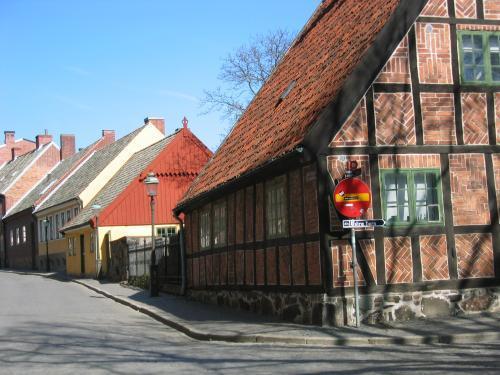
If you are going to be in southern Sweden or eastern Denmark, you may be interested that I will be giving a seminar on 15th September at the Department of Economic History at Lund University. Topic: "The Role of Energy in Long-Run Economic Growth". I don't know the time or exact location yet but I'm sure the department can help out on that. For those of you in Canberra I will be speaking on the same topic on 9th November here.
P.S.
My seminar is now on Wednesday 8th September at 2pm.
Monday, August 16, 2010
Turnbull on the NBN

Turnbull argues that the NBN essentially is the re-nationalization of Telstra (link requires registration but is free) just like the original RSPT was the partial nationalization of the mining industry.
Friday, August 13, 2010
ANU Speed Test
Yesterday, I blogged about internet speeds within Australia and between Australia and the US from our home in Canberra. Today, as promised I'm presenting the results of the same test conducted from my office at ANU:


Within Australia, ANU has access to NBN-like speeds (at least before the new 1GBs announcement). Between, Australia and the US the speed is much lower, though much faster than what we have at home. Based on this, we don't really need the NBN but we do need better international links as Gans pointed out. Now I don't know how ANU is connected domestically or internationally and whether other institutions and businesses that need speed can get it. So maybe an argument for the NBN can be made. But not based on the data I presented here anyway unless we think individuals need the kind of speed that ANU has access to and that some market failure is preventing them from getting it.


Within Australia, ANU has access to NBN-like speeds (at least before the new 1GBs announcement). Between, Australia and the US the speed is much lower, though much faster than what we have at home. Based on this, we don't really need the NBN but we do need better international links as Gans pointed out. Now I don't know how ANU is connected domestically or internationally and whether other institutions and businesses that need speed can get it. So maybe an argument for the NBN can be made. But not based on the data I presented here anyway unless we think individuals need the kind of speed that ANU has access to and that some market failure is preventing them from getting it.
Thursday, August 12, 2010
Internet Connectivity
Joshua Gans has been discussing internet speeds between different parts of the world and running some tests. So I ran my own tests from home and speeds are pretty low just between my home and a server in Canberra:

Our ISP sucks apparently, but most of the time I find our internet service to be adequate. Except when it isn't. Here's the test to San Jose, CA:

Only a bit slower... What I should do next is test these from the ANU campus...

Our ISP sucks apparently, but most of the time I find our internet service to be adequate. Except when it isn't. Here's the test to San Jose, CA:

Only a bit slower... What I should do next is test these from the ANU campus...
Ecological Economics Reviews
A while back I did a series of posts that serialized a paper I was revising on energy and growth, starting with this post. The paper has now been accepted for publication in the 2011 issue of Ecological Economics Reviews, which is a special annual issue of the Annals of the New York Academy of Sciences edited by Bob Costanza and Karin Limburg (Rated B by the ARC BTW). I just now have to switch my references from the Harvard system to the convoluted method used by Nature, PNAS, PLOS, and ANYAS.
Wednesday, August 11, 2010
George Fane Seminar @ Arndt-Corden Division of Economics
I went to George Fane's seminar yesterday on "The Taxation of Rents from Mineral Resources". It was well-attended by both people from ANU and the public service. The seminar might have provided the answer to my confusion about why the Henry Review and most economists discussing it argue that royalties are inefficient, while my intuition tells me that they're not so bad.
One of the cases that Fane looks at is where mining companies engage in "work program bidding" with the government. Companies promise to carry out exploration and development of the mining lease they are allocated. The company that promises the most gets the lease. It seems that this is the way that mining leases are mostly allocated in Australia. Under this arrangement, assuming that all companies have the same cost structure, competition between companies would result in bids to spend so much on development so that the average cost of production (including a normal return on capital) is equal to the price of the mineral. If a company doesn't bid that much then another company has an incentive to bid more. As a result there are no "rents" from mining. This resource regime is similar to an open-access resource.
Introduction of a royalty will discourage this overbidding. In theory the royalty can be chosen so that the marginal cost of production is equal to the price of the mineral in the market. This level of production is the efficient level. The royalty collected by the government is then equal to the difference between the price of the mineral and the average cost of production. The government receives all the "rent" from production of the resource.
In this case, removal of royalties and introduction of a Brown tax results in over-exploitation of the resource and "dissipation of rents". Royalties are efficient and "rent taxes" are inefficient. (From here on, is my interpretation of what this means, not what George Fane said:) The model underlying the Henry Review analysis must be one where private landowners are developing the mineral resources on their own land. Obviously, they won't waste resources in doing so. Introduction of a royalty tax by the government is then distorting and inefficient. The Brown tax, where the government demands a share in the enterprise would be efficient assuming that the goverment really shares in all costs (including the CEO's time etc.) and there is no uncertainty.
(Back to what Fane said in the seminar:). Fane also discussed the case of auctioning mining leases. With no uncertainty a rent tax simply decreases the amount paid for mining leases by the amount of the rent tax. Introducing a rent tax results in the government taking on more risk. Rather than getting higher auction proceeds they take a bet on getting higher revenues from a rent tax but they also take on the risk that mineral prices are lower or the lease property is not as productive as expected and they have to pay out money to the mining company.
One of the cases that Fane looks at is where mining companies engage in "work program bidding" with the government. Companies promise to carry out exploration and development of the mining lease they are allocated. The company that promises the most gets the lease. It seems that this is the way that mining leases are mostly allocated in Australia. Under this arrangement, assuming that all companies have the same cost structure, competition between companies would result in bids to spend so much on development so that the average cost of production (including a normal return on capital) is equal to the price of the mineral. If a company doesn't bid that much then another company has an incentive to bid more. As a result there are no "rents" from mining. This resource regime is similar to an open-access resource.
Introduction of a royalty will discourage this overbidding. In theory the royalty can be chosen so that the marginal cost of production is equal to the price of the mineral in the market. This level of production is the efficient level. The royalty collected by the government is then equal to the difference between the price of the mineral and the average cost of production. The government receives all the "rent" from production of the resource.
In this case, removal of royalties and introduction of a Brown tax results in over-exploitation of the resource and "dissipation of rents". Royalties are efficient and "rent taxes" are inefficient. (From here on, is my interpretation of what this means, not what George Fane said:) The model underlying the Henry Review analysis must be one where private landowners are developing the mineral resources on their own land. Obviously, they won't waste resources in doing so. Introduction of a royalty tax by the government is then distorting and inefficient. The Brown tax, where the government demands a share in the enterprise would be efficient assuming that the goverment really shares in all costs (including the CEO's time etc.) and there is no uncertainty.
(Back to what Fane said in the seminar:). Fane also discussed the case of auctioning mining leases. With no uncertainty a rent tax simply decreases the amount paid for mining leases by the amount of the rent tax. Introducing a rent tax results in the government taking on more risk. Rather than getting higher auction proceeds they take a bet on getting higher revenues from a rent tax but they also take on the risk that mineral prices are lower or the lease property is not as productive as expected and they have to pay out money to the mining company.
Tuesday, August 10, 2010
Interfuel Substitution: A Meta-Analysis - Accepted for Publication
My paper on the meta-analysis of interfuel substitution has been accepted for publication at the Journal of Economic Surveys (an A-rated journal).
Monday, August 9, 2010
Peter May's Review of "Prosperity without Growth"
I don't remember seeing this before, except in the form of a special review section - Two reviews of the same book in the same journal. You've seen my version. Now here is Peter May's version.
Sunday, August 8, 2010
Change of Date for Seminar
Change of date for my forthcoming seminar. It will now be on 9th November. All the other details remain the same.
Friday, August 6, 2010
EERH Research Reports: July 2010
EERH Research Reports continued to enjoy an uptrend in downloads last month. Peter Wood's paper Climate Change and Game Theory was the most downloaded. Globally, RePEc crossed the 25,000 barrier in terms of the number of members with registered publications. I highly recommend all economists who aren't registered yet to register and make themselves more visible to the economics research community.
Thursday, August 5, 2010
University Websites

There is a lot of discussion going on about this cartoon. I find that university websites vary a lot in usability. Usually I am looking for either a page about a specific faculty member and what they research and teach and a list of their publications and maybe a CV. Other times I want an overview of a department or research centre. But a lot of websites are only geared to either selling the university to prospective undergrads - and according to this doing a poor job of that and/or providing a bunch of HR information to faculty and staff. The better sites allow navigation both via a "user menu" - future students, current students, faculty etc.- and via an "organizational structure menu" - according to academic and non-academic departments, centres etc. Sometimes I have to resort to Google because even the search function on the university's website doesn't get me what I want.
ANU's website is one of the best sites in my opinion. In the middle of the page is the user menu. At bottom left there is an organizational structure menu and at the top are a bunch of index and search tools. On the other hand it's not that pretty. But this article says function is better than aesthetics.
Tuesday, August 3, 2010
Joseph Stiglitz Speaks at ANU

I went to see the "Crawford School Oratory" today given by Joseph Stiglitz - just one of the stops on his Australian tour. As you probably know he is a Nobel Prize winning economist who was chief economist at the World Bank and since then has been critical of both the Bank and the IMF and increasingly of other financial institutions and free market oriented capitalism in general. The talk was titled "The Road to Ruin" and was about the Global Financial Crisis/North Atlantic Recession. He was a good speaker and pretty funny at many points. The audience was often laughing. In response to a question about "too big to fail banks", Stiglitz said they should be broken up (something I have suggested but doesn't seem to be favored among economists). In response to a question on climate change, he noted that carbon is more mis-priced than risk was leading up to the GFC and called for a price on carbon saying that he favored carbon taxes and a reduction in taxes on labor and capital.
The event was described as "booked out", but actually there were plenty of empty seats in the 1442 capacity concert hall, especially in the upstairs seating. Registration was required but the event was free. If it doesn't cost anything to say you are coming and no one will notice if you don't come in such a large crowd, why not say you're coming just in case you feel like it on the day? I wonder whether there are people who missed out on seeing the talk because the event was supposedly booked out. Not a very efficient process I think.
Monday, August 2, 2010
Switching from html to pdf
Since 1995 I have had a file called sterncv.html on the web. It was created by Laura Guild at Boston University and has followed me around the world till eventually it settled on sterndavidi.com. But now I have deleted it and switched to a pdf CV only. I still have all my publications listed on two webpages with links to RePEc or journal websites. The reason I made this change are:
1. Most other academics now have their CV's online as pdfs.
2. Most of the relevant links are either on my publications pages or elsewhere on my website.
3. I got tired of trying to maintain and update the html CV.
I might have done this earlier if it wasn't for a little nostalgia for my oldest webpage!
1. Most other academics now have their CV's online as pdfs.
2. Most of the relevant links are either on my publications pages or elsewhere on my website.
3. I got tired of trying to maintain and update the html CV.
I might have done this earlier if it wasn't for a little nostalgia for my oldest webpage!
Sunday, August 1, 2010
Excellent Advice for a Research Career
Shuang linked to this excellent advice on selecting research topics. I have tried to follow these rules in my career. I had no idea though that they had been written down by someone in this form. Occasionally though the need to get money and/or get published fast has over-ridden these guidelines, but as long-term criteria I think they are very good if you are really a serious/ambitious researcher.
The third rule is:
"Never tackle a problem of which you can be pretty sure that (now or in the near future) it will be tackled by others who are, in relation to that problem, at least as competent and well-equipped as you."
I would modify this. Perhaps, the "near future" is the critical point here. If you think others can tackle the problem in a much better way than you and are likely working on it right now, then leave it alone, but if they would do roughly the same thing as you but you are pretty sure that you have had the idea way before anyone else, why not go for it?
The third rule is:
"Never tackle a problem of which you can be pretty sure that (now or in the near future) it will be tackled by others who are, in relation to that problem, at least as competent and well-equipped as you."
I would modify this. Perhaps, the "near future" is the critical point here. If you think others can tackle the problem in a much better way than you and are likely working on it right now, then leave it alone, but if they would do roughly the same thing as you but you are pretty sure that you have had the idea way before anyone else, why not go for it?
Saturday, July 31, 2010
Famous Rejections
In a posthumously published paper, Clive Granger discusses the evolution of the idea of cointegration. It turns out that his famous 1987 paper with Engel in Econometrica was rejected twice (without an invitation to resubmit). The first version was sole authored. The second one was dual authored "but it was also rejected for not being sufficiently original"! That's one of the papers that won Engel and Granger the Nobel Prize in Economics. Eventually, the editor of Econometrica wrote to Granger and asked him to resubmit it because they were receiving other papers on cointegration!
The moral is, just because a journal rejects your paper, it doesn't mean it isn't any good.
Also of interest is another paper exploring the history of cointegration in the same issue of J. Econometrics by Boswijk et al.
The moral is, just because a journal rejects your paper, it doesn't mean it isn't any good.
Also of interest is another paper exploring the history of cointegration in the same issue of J. Econometrics by Boswijk et al.
Subscribe to:
Posts (Atom)