Wednesday, August 18, 2010
Submitted my Main Hub Paper
I finally submitted the main report on my Environmental Economics Research Hub project to a journal. It took a while because I wanted to approach the paper fresh in order to hack out around 5,000 words to get it down below 10,000 words. And I've been busy working on completing a bunch of other projects, as you may have noticed. I blogged about the paper when I finished the working paper back in March. Current working title is "Modeling International Trends in Energy Efficiency".


Tuesday, August 17, 2010
Seminar at Lund
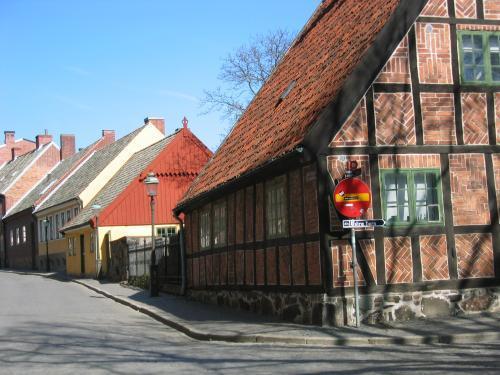
If you are going to be in southern Sweden or eastern Denmark, you may be interested that I will be giving a seminar on 15th September at the Department of Economic History at Lund University. Topic: "The Role of Energy in Long-Run Economic Growth". I don't know the time or exact location yet but I'm sure the department can help out on that. For those of you in Canberra I will be speaking on the same topic on 9th November here.
P.S.
My seminar is now on Wednesday 8th September at 2pm.
Monday, August 16, 2010
Turnbull on the NBN

Turnbull argues that the NBN essentially is the re-nationalization of Telstra (link requires registration but is free) just like the original RSPT was the partial nationalization of the mining industry.
Friday, August 13, 2010
ANU Speed Test
Yesterday, I blogged about internet speeds within Australia and between Australia and the US from our home in Canberra. Today, as promised I'm presenting the results of the same test conducted from my office at ANU:


Within Australia, ANU has access to NBN-like speeds (at least before the new 1GBs announcement). Between, Australia and the US the speed is much lower, though much faster than what we have at home. Based on this, we don't really need the NBN but we do need better international links as Gans pointed out. Now I don't know how ANU is connected domestically or internationally and whether other institutions and businesses that need speed can get it. So maybe an argument for the NBN can be made. But not based on the data I presented here anyway unless we think individuals need the kind of speed that ANU has access to and that some market failure is preventing them from getting it.


Within Australia, ANU has access to NBN-like speeds (at least before the new 1GBs announcement). Between, Australia and the US the speed is much lower, though much faster than what we have at home. Based on this, we don't really need the NBN but we do need better international links as Gans pointed out. Now I don't know how ANU is connected domestically or internationally and whether other institutions and businesses that need speed can get it. So maybe an argument for the NBN can be made. But not based on the data I presented here anyway unless we think individuals need the kind of speed that ANU has access to and that some market failure is preventing them from getting it.
Thursday, August 12, 2010
Internet Connectivity
Joshua Gans has been discussing internet speeds between different parts of the world and running some tests. So I ran my own tests from home and speeds are pretty low just between my home and a server in Canberra:

Our ISP sucks apparently, but most of the time I find our internet service to be adequate. Except when it isn't. Here's the test to San Jose, CA:

Only a bit slower... What I should do next is test these from the ANU campus...

Our ISP sucks apparently, but most of the time I find our internet service to be adequate. Except when it isn't. Here's the test to San Jose, CA:

Only a bit slower... What I should do next is test these from the ANU campus...
Ecological Economics Reviews
A while back I did a series of posts that serialized a paper I was revising on energy and growth, starting with this post. The paper has now been accepted for publication in the 2011 issue of Ecological Economics Reviews, which is a special annual issue of the Annals of the New York Academy of Sciences edited by Bob Costanza and Karin Limburg (Rated B by the ARC BTW). I just now have to switch my references from the Harvard system to the convoluted method used by Nature, PNAS, PLOS, and ANYAS.
Wednesday, August 11, 2010
George Fane Seminar @ Arndt-Corden Division of Economics
I went to George Fane's seminar yesterday on "The Taxation of Rents from Mineral Resources". It was well-attended by both people from ANU and the public service. The seminar might have provided the answer to my confusion about why the Henry Review and most economists discussing it argue that royalties are inefficient, while my intuition tells me that they're not so bad.
One of the cases that Fane looks at is where mining companies engage in "work program bidding" with the government. Companies promise to carry out exploration and development of the mining lease they are allocated. The company that promises the most gets the lease. It seems that this is the way that mining leases are mostly allocated in Australia. Under this arrangement, assuming that all companies have the same cost structure, competition between companies would result in bids to spend so much on development so that the average cost of production (including a normal return on capital) is equal to the price of the mineral. If a company doesn't bid that much then another company has an incentive to bid more. As a result there are no "rents" from mining. This resource regime is similar to an open-access resource.
Introduction of a royalty will discourage this overbidding. In theory the royalty can be chosen so that the marginal cost of production is equal to the price of the mineral in the market. This level of production is the efficient level. The royalty collected by the government is then equal to the difference between the price of the mineral and the average cost of production. The government receives all the "rent" from production of the resource.
In this case, removal of royalties and introduction of a Brown tax results in over-exploitation of the resource and "dissipation of rents". Royalties are efficient and "rent taxes" are inefficient. (From here on, is my interpretation of what this means, not what George Fane said:) The model underlying the Henry Review analysis must be one where private landowners are developing the mineral resources on their own land. Obviously, they won't waste resources in doing so. Introduction of a royalty tax by the government is then distorting and inefficient. The Brown tax, where the government demands a share in the enterprise would be efficient assuming that the goverment really shares in all costs (including the CEO's time etc.) and there is no uncertainty.
(Back to what Fane said in the seminar:). Fane also discussed the case of auctioning mining leases. With no uncertainty a rent tax simply decreases the amount paid for mining leases by the amount of the rent tax. Introducing a rent tax results in the government taking on more risk. Rather than getting higher auction proceeds they take a bet on getting higher revenues from a rent tax but they also take on the risk that mineral prices are lower or the lease property is not as productive as expected and they have to pay out money to the mining company.
One of the cases that Fane looks at is where mining companies engage in "work program bidding" with the government. Companies promise to carry out exploration and development of the mining lease they are allocated. The company that promises the most gets the lease. It seems that this is the way that mining leases are mostly allocated in Australia. Under this arrangement, assuming that all companies have the same cost structure, competition between companies would result in bids to spend so much on development so that the average cost of production (including a normal return on capital) is equal to the price of the mineral. If a company doesn't bid that much then another company has an incentive to bid more. As a result there are no "rents" from mining. This resource regime is similar to an open-access resource.
Introduction of a royalty will discourage this overbidding. In theory the royalty can be chosen so that the marginal cost of production is equal to the price of the mineral in the market. This level of production is the efficient level. The royalty collected by the government is then equal to the difference between the price of the mineral and the average cost of production. The government receives all the "rent" from production of the resource.
In this case, removal of royalties and introduction of a Brown tax results in over-exploitation of the resource and "dissipation of rents". Royalties are efficient and "rent taxes" are inefficient. (From here on, is my interpretation of what this means, not what George Fane said:) The model underlying the Henry Review analysis must be one where private landowners are developing the mineral resources on their own land. Obviously, they won't waste resources in doing so. Introduction of a royalty tax by the government is then distorting and inefficient. The Brown tax, where the government demands a share in the enterprise would be efficient assuming that the goverment really shares in all costs (including the CEO's time etc.) and there is no uncertainty.
(Back to what Fane said in the seminar:). Fane also discussed the case of auctioning mining leases. With no uncertainty a rent tax simply decreases the amount paid for mining leases by the amount of the rent tax. Introducing a rent tax results in the government taking on more risk. Rather than getting higher auction proceeds they take a bet on getting higher revenues from a rent tax but they also take on the risk that mineral prices are lower or the lease property is not as productive as expected and they have to pay out money to the mining company.
Tuesday, August 10, 2010
Interfuel Substitution: A Meta-Analysis - Accepted for Publication
My paper on the meta-analysis of interfuel substitution has been accepted for publication at the Journal of Economic Surveys (an A-rated journal).
Monday, August 9, 2010
Peter May's Review of "Prosperity without Growth"
I don't remember seeing this before, except in the form of a special review section - Two reviews of the same book in the same journal. You've seen my version. Now here is Peter May's version.
Sunday, August 8, 2010
Change of Date for Seminar
Change of date for my forthcoming seminar. It will now be on 9th November. All the other details remain the same.
Friday, August 6, 2010
EERH Research Reports: July 2010
EERH Research Reports continued to enjoy an uptrend in downloads last month. Peter Wood's paper Climate Change and Game Theory was the most downloaded. Globally, RePEc crossed the 25,000 barrier in terms of the number of members with registered publications. I highly recommend all economists who aren't registered yet to register and make themselves more visible to the economics research community.
Thursday, August 5, 2010
University Websites

There is a lot of discussion going on about this cartoon. I find that university websites vary a lot in usability. Usually I am looking for either a page about a specific faculty member and what they research and teach and a list of their publications and maybe a CV. Other times I want an overview of a department or research centre. But a lot of websites are only geared to either selling the university to prospective undergrads - and according to this doing a poor job of that and/or providing a bunch of HR information to faculty and staff. The better sites allow navigation both via a "user menu" - future students, current students, faculty etc.- and via an "organizational structure menu" - according to academic and non-academic departments, centres etc. Sometimes I have to resort to Google because even the search function on the university's website doesn't get me what I want.
ANU's website is one of the best sites in my opinion. In the middle of the page is the user menu. At bottom left there is an organizational structure menu and at the top are a bunch of index and search tools. On the other hand it's not that pretty. But this article says function is better than aesthetics.
Tuesday, August 3, 2010
Joseph Stiglitz Speaks at ANU

I went to see the "Crawford School Oratory" today given by Joseph Stiglitz - just one of the stops on his Australian tour. As you probably know he is a Nobel Prize winning economist who was chief economist at the World Bank and since then has been critical of both the Bank and the IMF and increasingly of other financial institutions and free market oriented capitalism in general. The talk was titled "The Road to Ruin" and was about the Global Financial Crisis/North Atlantic Recession. He was a good speaker and pretty funny at many points. The audience was often laughing. In response to a question about "too big to fail banks", Stiglitz said they should be broken up (something I have suggested but doesn't seem to be favored among economists). In response to a question on climate change, he noted that carbon is more mis-priced than risk was leading up to the GFC and called for a price on carbon saying that he favored carbon taxes and a reduction in taxes on labor and capital.
The event was described as "booked out", but actually there were plenty of empty seats in the 1442 capacity concert hall, especially in the upstairs seating. Registration was required but the event was free. If it doesn't cost anything to say you are coming and no one will notice if you don't come in such a large crowd, why not say you're coming just in case you feel like it on the day? I wonder whether there are people who missed out on seeing the talk because the event was supposedly booked out. Not a very efficient process I think.
Monday, August 2, 2010
Switching from html to pdf
Since 1995 I have had a file called sterncv.html on the web. It was created by Laura Guild at Boston University and has followed me around the world till eventually it settled on sterndavidi.com. But now I have deleted it and switched to a pdf CV only. I still have all my publications listed on two webpages with links to RePEc or journal websites. The reason I made this change are:
1. Most other academics now have their CV's online as pdfs.
2. Most of the relevant links are either on my publications pages or elsewhere on my website.
3. I got tired of trying to maintain and update the html CV.
I might have done this earlier if it wasn't for a little nostalgia for my oldest webpage!
1. Most other academics now have their CV's online as pdfs.
2. Most of the relevant links are either on my publications pages or elsewhere on my website.
3. I got tired of trying to maintain and update the html CV.
I might have done this earlier if it wasn't for a little nostalgia for my oldest webpage!
Sunday, August 1, 2010
Excellent Advice for a Research Career
Shuang linked to this excellent advice on selecting research topics. I have tried to follow these rules in my career. I had no idea though that they had been written down by someone in this form. Occasionally though the need to get money and/or get published fast has over-ridden these guidelines, but as long-term criteria I think they are very good if you are really a serious/ambitious researcher.
The third rule is:
"Never tackle a problem of which you can be pretty sure that (now or in the near future) it will be tackled by others who are, in relation to that problem, at least as competent and well-equipped as you."
I would modify this. Perhaps, the "near future" is the critical point here. If you think others can tackle the problem in a much better way than you and are likely working on it right now, then leave it alone, but if they would do roughly the same thing as you but you are pretty sure that you have had the idea way before anyone else, why not go for it?
The third rule is:
"Never tackle a problem of which you can be pretty sure that (now or in the near future) it will be tackled by others who are, in relation to that problem, at least as competent and well-equipped as you."
I would modify this. Perhaps, the "near future" is the critical point here. If you think others can tackle the problem in a much better way than you and are likely working on it right now, then leave it alone, but if they would do roughly the same thing as you but you are pretty sure that you have had the idea way before anyone else, why not go for it?
Saturday, July 31, 2010
Famous Rejections
In a posthumously published paper, Clive Granger discusses the evolution of the idea of cointegration. It turns out that his famous 1987 paper with Engel in Econometrica was rejected twice (without an invitation to resubmit). The first version was sole authored. The second one was dual authored "but it was also rejected for not being sufficiently original"! That's one of the papers that won Engel and Granger the Nobel Prize in Economics. Eventually, the editor of Econometrica wrote to Granger and asked him to resubmit it because they were receiving other papers on cointegration!
The moral is, just because a journal rejects your paper, it doesn't mean it isn't any good.
Also of interest is another paper exploring the history of cointegration in the same issue of J. Econometrics by Boswijk et al.
The moral is, just because a journal rejects your paper, it doesn't mean it isn't any good.
Also of interest is another paper exploring the history of cointegration in the same issue of J. Econometrics by Boswijk et al.
Inheritance and Economic Growth
I am reading an interesting paper by Thomas Piketty on inheritance and economic growth. It's a long paper with lots of stuff in it. But here is the key point. They construct time series for inheritance (both bequests and inter-vivos transfers) for France over almost 200 years. One source is French estate tax data and the other a model of demography, saving etc. The gap between the two series (representing tax evasion) is relatively small and constant over time:

Annual flows of inheritance averaged 20% of national income in the 19th century but fell to as low as 5% of national income in the mid-20th century. Since then the share has risen again to around 15%. These numbers are huge - intergenerational transfers are around the same magnitude as the savings rate. Part of the explanation for the U-shaped trajectory is changes in economic growth rates over time. In periods of fast economic growth inheritances from the past poorer generation become less significant. Similarly, savings rates are high in fast growing economies like China partly because the old are not dissaving much compared to what the young are saving. Of course, inequality was also lower in the mid-20th century but was that a result of the low role of inheritances and the high role of current labor income as well as progressive income taxation or also a result of the high economic growth rate? Perhaps progressive income taxation is "easier to get away with" when inequality is lower anyway and growth is faster?

Annual flows of inheritance averaged 20% of national income in the 19th century but fell to as low as 5% of national income in the mid-20th century. Since then the share has risen again to around 15%. These numbers are huge - intergenerational transfers are around the same magnitude as the savings rate. Part of the explanation for the U-shaped trajectory is changes in economic growth rates over time. In periods of fast economic growth inheritances from the past poorer generation become less significant. Similarly, savings rates are high in fast growing economies like China partly because the old are not dissaving much compared to what the young are saving. Of course, inequality was also lower in the mid-20th century but was that a result of the low role of inheritances and the high role of current labor income as well as progressive income taxation or also a result of the high economic growth rate? Perhaps progressive income taxation is "easier to get away with" when inequality is lower anyway and growth is faster?
Friday, July 30, 2010
Seminar 26th October
I know this is a long time off, but I just agreed to do a seminar at 2pm on 26th October in Seminar Room B, Coombs Building, ANU. Title is: "The Role of Energy in Long-Run Economic Growth". I will report on my work in collaboration with Astrid Kander at University of Lund on energy and growth in Sweden over a couple of centuries. I also have started supervising a graduate student as part of an applied econometrics class at ANU to work on applying time series techniques to the same data set. Hopefully, we can come up with something interesting.
Thursday, July 29, 2010
NOAA State of the Climate 2009
I've been looking for a "state of the world" article for the class I will be teaching in Lund. Today, NOAA released their annual report on the state of the climate. That is an excellent example of the kind of thing I'm looking for. Now, if I could cover energy trends, pollutants, biodiversity etc. as well as the climate in one article that would be great. It's pretty easy to find reports on such topics but as the course is a very short one we can't overload the students with readings.
Here is the summary figure of the report:

Click on the image to get a better view.
Here is the summary figure of the report:

Click on the image to get a better view.
Strategic Behavior and the Environment

Another new journal in the environmental economics space. I've never heard of the publisher but the editor is Ariel Dinar (UC Riverside) and they have a bunch of well known people on the editorial board. It's not quite as star studded as the board of Climate Change Economics but still pretty impressive.
Monday, July 26, 2010
Suggest an Article for My Students
They'll only be my students for one guest lecture. They are students in a business masters who are taking an environmental economics class. The textbook for the class is undergrad level and a bit old (they cover the whole book in 3 weeks). I need an overview article about global trends in energy, pollution, climate change, biodiversity, the more the merrier over the last decade at least to supplement/update it. Lots of pretty charts would be great. Any suggestions?
Friday, July 23, 2010
Gillard's Climate Initiative

The main feature of Gillard's climate policy announced today is to run a 150 person citizens' jury on the issue. Strangely most of the green activists quoted are against the idea but many of my colleagues in ecological economics would probably think this was a great idea in principle. Shuang's first reaction was though that: "it will be tough to handle 150 people".
Gillard also said that under a future ETS baselines would be maintained at their CPRS level encouraging energy conservation and emissions reduction in the meantime. And that there will be a ban on "dirty coal fired power stations". In other words, they must be retrofittable with CCS, I presume.
And it seems that the US is also deferring policy to the future. But China announces that it will introduce an ETS within 5 years.
Thursday, July 22, 2010
Global Map of Forest Canopy Height

NASA has produced a cool map of world forest heights. Woodlands and savannas are not included so the green areas are a very low end estimate of world forest cover.
Wednesday, July 21, 2010
IAmScientist
My wife passed on an invitation she got to join a new site called I Am Scientist. Seems to be yet another competitor with ResearchGate, Academia.edu, CoS, ResearcherID and for economists RePEc. This site mainly seems to have medical scientists signed up so far. No-one yet seems to have the momentum of Facebook or LinkedIn in the academic space.
Monday, July 19, 2010
Jobs Websites
VoxEU now has a jobs website. It has a lot of European jobs listed, which nicely complements the U.S. focus of JOE (JObs for Economists). For Australian jobs, UniJobs is pretty comprehensive. Just put the keywords you are interested in into their search engine.
Subscribe to:
Posts (Atom)